The Challenges of Reporting in Conflict Zones
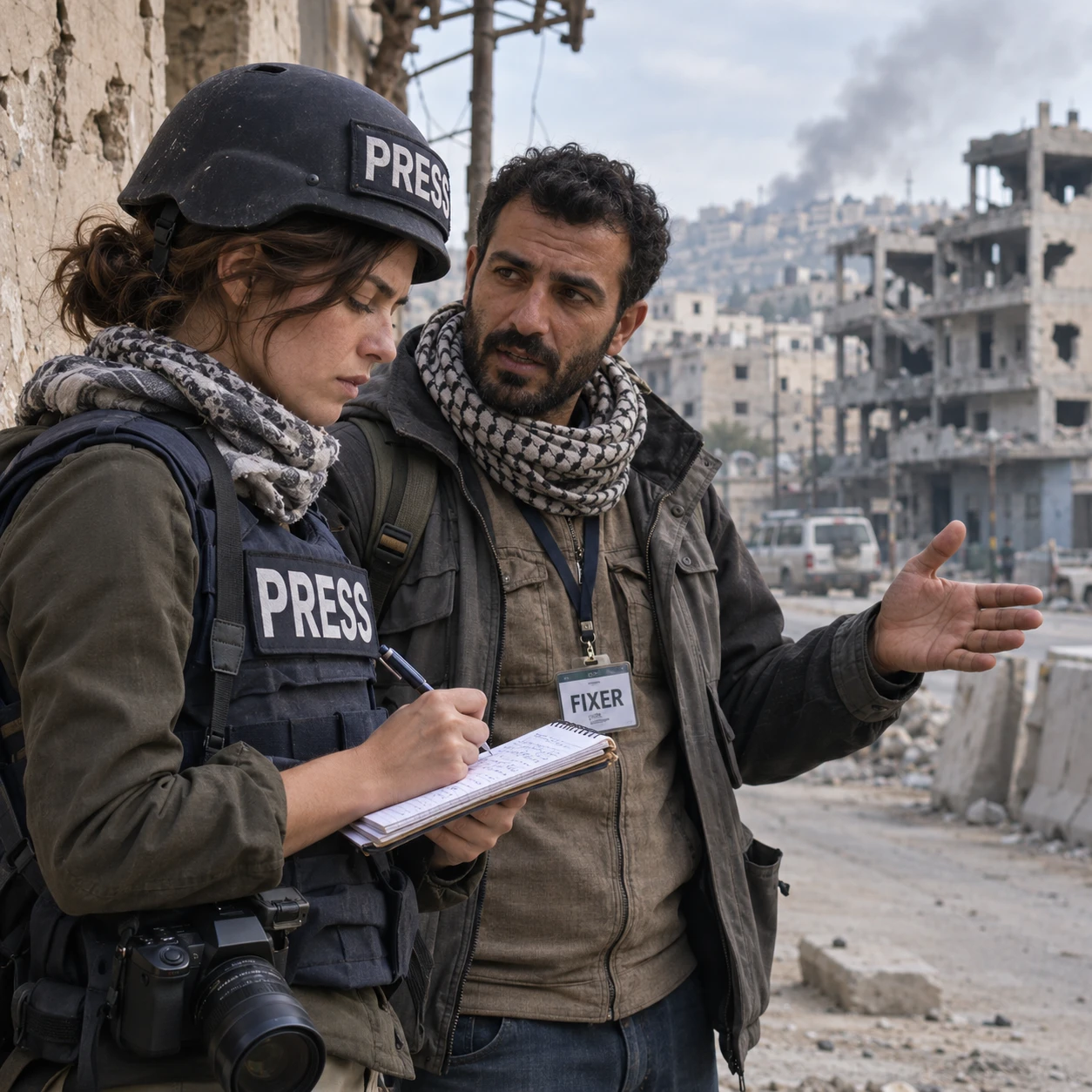
Reporting from a conflict zone means working where violence, political pressure, and unreliable information can shape every decision. Journalists face physical danger, restricted access, difficult verification, and ethical choices about how to report without putting sources or communities at greater risk.
These pressures are connected. A blocked road can limit what a reporter can confirm; a public account of an interview may expose a source; and prolonged exposure to violence can affect judgment and wellbeing. **Conflict-zone journalism** depends on careful preparation and clear limits, not on the idea that risk can be eliminated.
Physical danger and personal safety
Physical danger in a conflict zone can include crossfire, explosive hazards, detention, threats, and sudden changes in local conditions. Safety planning can reduce exposure, but no training or protective equipment can guarantee a journalist’s safety.
The risks vary by place, assignment, and identity. Reporters may be caught near fighting, targeted because of their work or perceived affiliations, or detained at checkpoints. Local journalists and freelancers can face particular exposure because they often live in the communities they cover and may have fewer institutional resources. Gender, nationality, language, and visible press identification can also affect how authorities or armed groups treat a reporter.
Preparation should begin before deployment. News organizations and journalists need to assess whether the assignment is necessary, identify who is responsible for safety decisions, agree on check-in procedures, and establish what would trigger a pause or withdrawal. **Hostile-environment training** can help reporters recognize hazards and prepare for emergencies, but it is not a substitute for sound assignment planning, local expertise, or the ability to leave.
Protective measures involve trade-offs. Visible press markings may help identify a journalist in some situations, while making them easier to single out in others. The right choice depends on the context and should be made through a specific risk assessment, not a universal rule.
Access, censorship, and control of information
Access restrictions limit where journalists can go and whom they can speak to, while censorship and surveillance can shape what they are able to report. These controls make independent reporting harder and can leave the public reliant on official or partisan accounts.
Authorities or armed groups may deny entry, impose movement restrictions, monitor communications, or require reporters to travel with official escorts. An escort can provide access while also limiting interviews and locations. Journalists may be pressured to submit material for review, use approved language, or avoid specific subjects. In some places, local reporters face legal threats or retaliation for publishing independently.
When access is blocked, a journalist should distinguish direct observation from secondhand accounts and explain what could not be independently checked. A report based on interviews outside an area may still be valuable, but it is not the same as on-the-ground verification. **Press freedom** matters here because audiences need to understand who controls access and how that control affects the evidence available.
Surveillance complicates the work further. Calls, messages, location data, and social media activity may reveal reporting plans or the identities of contacts. Digital security practices can reduce unnecessary exposure, but they cannot make communications completely safe. Reporters should avoid promising confidentiality they cannot protect and should consider whether a detail is essential before publishing it.
Verifying information under pressure
Journalists verify conflict-related claims by checking sources, evidence, timing, and context against independent information wherever possible. When access or communications fail, they should clearly state what is confirmed, what remains uncertain, and why.
In a fast-moving crisis, a video may be old, filmed somewhere else, or edited to remove important context. A witness may be credible about what they saw but unable to know who caused an explosion or how many people were affected. Officials and armed groups may release accurate information, selective claims, or propaganda. Speed does not remove the need to test each assertion.
A practical verification check asks four questions: Who is the source? What did they observe directly? Can the claim be corroborated by another independent source or evidence? What uncertainty must be made clear to the audience? For images and video, reporters can examine landmarks, weather, language, shadows, and upload history, while avoiding conclusions that the available material cannot support.
Communications outages make this work slower. A reporter may be unable to call a witness again, confirm a location, or reach an editor. In those circumstances, holding a claim for further checks can be more responsible than publishing an apparently precise but weakly supported account. Verification is a process, not a label that can be attached to a post after a quick search.
Protecting sources and vulnerable people
Protecting sources in a conflict zone means considering how an interview, image, name, or digital trace could expose someone to retaliation. Informed consent, careful handling of identifying details, and realistic promises about anonymity are central to responsible reporting.
People may agree to speak without understanding how widely a story will circulate or how authorities, armed groups, employers, or neighbors might interpret it. Reporters should explain the purpose of the interview, where material may appear, and whether identifying details can be withheld. Consent should be voluntary and specific; it may need to be revisited if the story’s scope changes.
Children, displaced people, survivors of violence, and people in custody may face added risks. An image can identify someone through a face, uniform, sign, background, or social media account even when a name is omitted. **Digital security** therefore includes thinking about devices, shared files, location metadata, contact lists, and who can access unpublished material. Collecting less sensitive information can sometimes protect a source better than trying to secure a large archive.
There is no single anonymity technique that works in every setting. A pseudonym may not conceal someone in a small community, and blurring a face may not remove other identifying clues. Journalists should weigh the public interest in identification against foreseeable harm and tell sources honestly what protections they can and cannot provide.
Ethical reporting amid human suffering
Ethical conflict reporting presents evidence accurately while treating people affected by violence with dignity. Journalists should avoid unnecessary graphic detail, dehumanizing language, and images that add shock but little public understanding.
Accuracy requires more than avoiding factual errors. Descriptions should not treat a community as a single political actor or repeat labels that imply guilt without evidence. Where responsibility for an incident is disputed, the report should identify the competing claims and explain what independent evidence supports them. False balance is also a risk: giving every claim equal weight can obscure a strong evidentiary record.
Images of death, injury, or grief raise questions about consent, news value, and potential harm to families. Before publication, editors can ask whether the image establishes something essential, whether a less intrusive image would do the job, and whether the person can be identified. **Editorial ethics** does not mean hiding suffering; it means making deliberate choices about what audiences need to see and what may cause avoidable harm.
Language matters, too. Precise terms such as “witness,” “survivor,” or “people displaced from their homes” are often more informative than sweeping labels. When facts are incomplete, uncertainty belongs in the story rather than in a vague disclaimer readers may overlook.
Psychological strain and newsroom support
Conflict reporting can expose journalists to fear, grief, disturbing material, and prolonged uncertainty, all of which can affect mental health. Preparation, supportive editors, peer connection, and access to professional care can help, though they do not prevent every psychological impact.
Stress may appear during an assignment or after returning home. Sleep problems, irritability, difficulty concentrating, emotional numbness, or intrusive memories can affect both wellbeing and reporting decisions. Newsrooms should treat these as possible responses to sustained pressure, not as proof that a journalist is unsuited to the work.
Support starts before deployment: discuss assignment limits, emergency contacts, time off, and how to raise concerns without being penalized. During and after coverage, regular check-ins and confidential access to mental-health professionals can help. Editors should also manage workloads, avoid pressuring staff to keep viewing graphic material, and make debriefing supportive rather than compulsory or performative.
Peer support can be valuable because colleagues understand the practical realities of the work. Still, it should complement professional care when needed. A responsible newsroom recognizes that trauma and mental health are part of occupational safety, alongside physical preparation and digital security.
Frequently asked questions
What makes reporting from a conflict zone dangerous?
Journalists may face crossfire, explosive hazards, detention, threats, surveillance, or retaliation. Risks change quickly and vary by location, assignment, and a reporter’s identity. Safety planning reduces some exposure but cannot remove all danger.
How do journalists verify information when access is restricted?
They compare firsthand accounts with independent sources and available evidence, check the origin and context of images, and label uncertainty clearly. When a claim cannot be corroborated, responsible reporting says so or waits for further confirmation.
How can reporters protect sources in a conflict zone?
They explain risks before interviews, obtain informed consent, limit identifying details, and consider how digital records or background clues could reveal someone’s identity. They should never promise a level of confidentiality they cannot deliver.
What support can help journalists manage trauma?
Hostile-environment preparation, supportive editorial check-ins, time to rest, trusted peers, and confidential professional mental-health care can help. Support should be available before, during, and after an assignment, without stigma.