The Rise of Citizen Journalism and Its Credibility in World Affairs
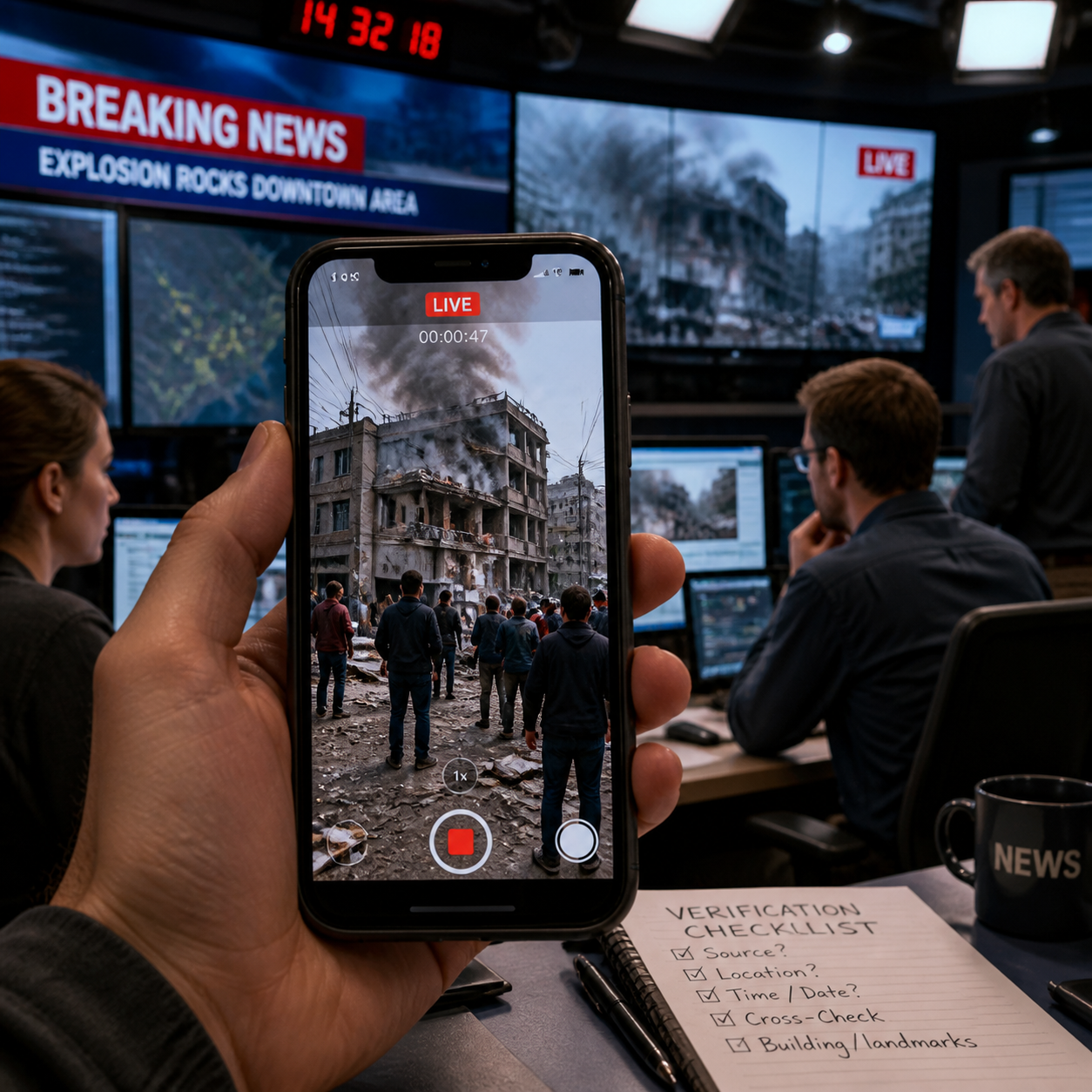
Citizen journalism has changed how the world learns about wars, disasters, protests, elections, and humanitarian crises. A person with a smartphone can publish eyewitness reporting to a global audience within seconds, often before a professional correspondent reaches the scene.
That speed creates both opportunity and risk. Citizen journalism can reveal events that authorities or news organizations cannot immediately access, yet a video’s existence does not prove its date, location, meaning, or authenticity. Its credibility depends on evidence, corroboration, transparency, and responsible editorial judgment.
What Is Citizen Journalism?
Citizen journalism is the collection, recording, verification, and publication of news by people who are not necessarily employed as professional journalists. It includes eyewitness reports, photographs, mobile video, local updates, community investigations, and firsthand accounts shared through digital channels.
Ordinary social media sharing becomes citizen journalism when a person intentionally documents an event or provides information for public understanding. A passerby posting a personal reaction is different from someone recording the conditions at a flood site, identifying a public safety concern, or consistently reporting developments from an area overlooked by mainstream media.
The distinction is not based only on employment. Professional journalism usually operates within an editorial system that includes assignment editors, source protection policies, fact-checking, legal review, corrections procedures, and standards for fairness. Citizen journalists may have exceptional local knowledge or direct access, but they often work without those institutional safeguards.
Commentary also differs from reporting. A strong opinion about an election or conflict may be valuable, but it should not be presented as verified news. Credible reporting separates observed facts, attributed claims, interpretation, and personal judgment.
Why Citizen Journalism Has Grown
Citizen journalism has grown because smartphones, mobile video, affordable internet access, and social media platforms have made news production available to almost anyone. The cost of recording and distributing information has fallen sharply, while audiences can follow events through direct posts instead of waiting for a scheduled broadcast.
Modern smartphones combine high-quality cameras, location tools, editing software, and instant connectivity. A witness can record a developing event, preserve the original file, contact a newsroom, and publish a short account from the same device. Messaging applications and social networks then amplify that material across borders.
Major global events have accelerated this shift. During earthquakes, public demonstrations, armed conflicts, disease outbreaks, and sudden political crises, local residents may provide the earliest visual evidence. International news organizations may face travel restrictions, security threats, limited language access, or a lack of correspondents in smaller communities.
Social media platforms also create networks of distributed observation. One person may upload footage, another may translate it, and a journalist or open-source intelligence researcher may compare it with satellite imagery, public records, weather data, and other videos.
Reach, however, is not the same as reliability. Algorithms often reward emotional, dramatic, or novel content. A misleading post can therefore travel faster than a careful correction. The same infrastructure that gives citizens a voice can also accelerate misinformation shared by mistake and disinformation created deliberately to deceive.
Its Role in Covering World Affairs
Citizen journalism is especially valuable in world affairs because eyewitnesses can provide rapid, local evidence from places that professional newsrooms cannot immediately reach. Their reports can help establish what happened, when it happened, and how an event affected people on the ground.
Local contributors understand geography, language, social dynamics, and community concerns that outside observers may miss. They may know which road was blocked, which neighborhood was damaged, or which official claim conflicts with what residents witnessed. That local perspective can correct incomplete international narratives.
Eyewitness reporting is often most useful during the first hours of a crisis. Mobile video can show smoke rising after an explosion, emergency workers responding to a flood, or crowds gathering before official statements appear. Such material can guide follow-up reporting and help newsrooms identify people who can provide direct testimony.
Citizen evidence also supports open-source intelligence, or OSINT. Researchers examine publicly available images, videos, maps, satellite data, shipping records, and official documents to reconstruct events. OSINT does not make every online post true; it provides methods for testing claims against independent evidence.
There are serious ethical limits. Publishing a victim’s face, home, or location can expose that person to retaliation. A video may reveal the position of civilians, activists, soldiers, or emergency teams. Responsible reporting considers consent, privacy, source protection, and the possibility that an armed group or government could exploit the material.
How Credible Is Citizen Journalism?
Citizen journalism can be highly credible when the contributor has firsthand access and the material is independently verified, but it is not automatically reliable. Its value and its weaknesses often come from the same source: proximity to the event.
A witness may capture details that no distant reporter can see. That immediacy can preserve evidence and challenge official narratives. Yet a witness may also have only a partial view, misunderstand what occurred, repeat a rumor, or present a personal interpretation as fact.
Credibility should therefore be assessed through several questions:
- Access: Was the contributor present, or are they reposting someone else’s material?
- Specificity: Does the report explain where, when, and how the information was obtained?
- Consistency: Does the account fit reliable footage, records, eyewitnesses, and known timelines?
- Transparency: Does the source acknowledge uncertainty, edits, limitations, or conflicts of interest?
- Track record: Has the contributor corrected errors and provided accurate information previously?
Professional journalism is not infallible. News organizations publish errors, rely on incomplete sources, and sometimes repeat official claims too quickly. Their advantage is usually editorial accountability: named standards, multiple levels of review, attribution, corrections, and a visible institution answerable to its audience.
The practical comparison is not citizen journalism versus professional journalism as two perfectly separate categories. A verified eyewitness may supply the strongest evidence, while a newsroom may provide the context and scrutiny needed to interpret it safely.
The Verification Challenge
To verify citizen-generated news, confirm the original source, location, date, context, and independent evidence before treating the claim as established fact. A clear video is only a starting point.
1. Find the original source
Trace the material beyond reposts and screenshots. Look for the earliest available upload, the creator’s account history, and a full-length version. Reposts can remove captions, crop important details, or falsely assign footage to a different event.
2. Check location and time
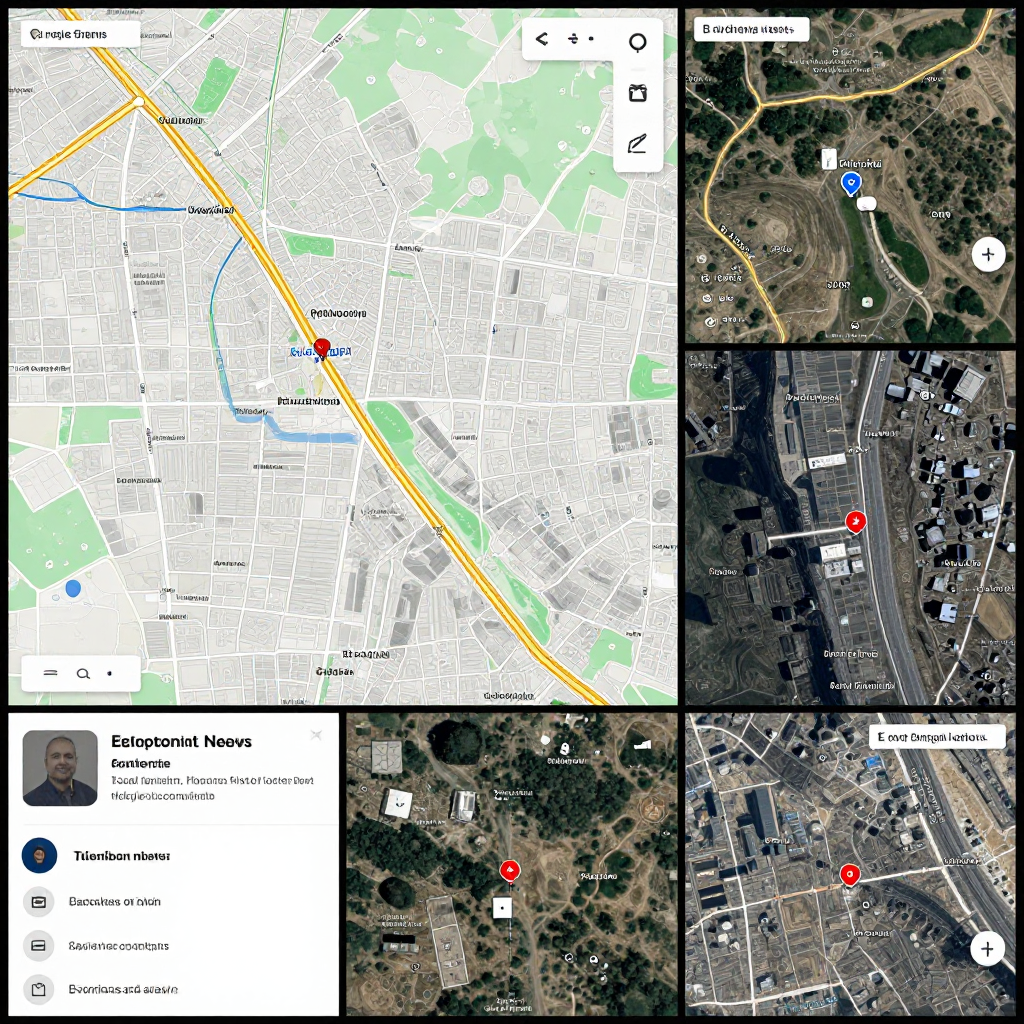
Compare visible landmarks, road layouts, signs, language, weather, shadows, architecture, and terrain with mapping tools or earlier photographs. Examine whether the claimed date matches weather conditions, clothing, construction details, and the sequence of known events.
3. Test the surrounding context
Ask what the footage does not show. A genuine clip can still be misleading if it begins after the incident, omits preceding violence, or uses an inaccurate caption. Search for longer versions and reports from people at the same location.
4. Look for corroboration
Compare the claim with independent eyewitnesses, reputable news organizations, official records, medical or humanitarian statements, satellite imagery, and verified photographs. Corroboration should be genuinely independent; dozens of accounts copying one original post do not count as dozens of sources.
5. Examine manipulation and recycling
Watch for unnatural audio, inconsistent shadows, abrupt cuts, mismatched lip movements, duplicated objects, and unusual compression. Reverse-image searches and frame searches can reveal older footage being reused. Artificial intelligence can help create convincing manipulated media, so visual confidence alone is unsafe.
Verification tools have limitations. A reverse-image search may miss a new video, geolocation can be difficult in damaged areas, and metadata may be stripped by social platforms. When evidence remains uncertain, the responsible label is unverified, not true or false by assumption.
The Relationship Between Citizens, Journalists, and News Organizations
Professional news organizations improve citizen journalism by authenticating material, adding context, protecting contributors, and clearly attributing what remains uncertain. The relationship works best as collaboration rather than simple content extraction.
Editors should preserve the original file, record how it was obtained, contact the creator, and establish whether the person witnessed the event directly. They should check consent and consider whether publication could endanger the source or identifiable people in the footage.
Journalists can then add reporting that a short post cannot provide: timelines, maps, expert analysis, historical context, responses from relevant authorities, and accounts from affected communities. Attribution should be precise. Readers should know whether a newsroom verified the location, independently confirmed the event, or merely reported that a person made a claim.
Platforms also have responsibilities. Clear labeling, provenance tools, links to corrections, friction before resharing, and rapid action against coordinated manipulation can reduce harm. Automated systems are useful for detecting patterns, but they cannot replace human judgment in complex conflicts.
Eyewitnesses deserve fair treatment. Newsrooms should avoid pressuring vulnerable people for access, explain how material will be used, and avoid exposing identifying details without a strong public-interest reason.
What Audiences Should Ask Before Trusting a Report
Before trusting or sharing a citizen-generated report, ask who created it, what they directly know, what evidence supports it, and whether reliable sources have corroborated it. A short pause can prevent a false claim from reaching thousands of people.
- Who is the author? Is the account identifiable, local to the event, and posting original material?
- What exactly is being claimed? Separate visible facts from captions, speculation, and political conclusions.
- Where and when was it recorded? Look for geographic and chronological evidence rather than trusting the post date.
- Is there independent corroboration? Check reputable professional journalism, official documents, humanitarian organizations, or multiple firsthand accounts.
- Does the publisher show its work? Look for source attribution, verification notes, links, and corrections.
- What could be missing? Consider selective editing, recycled media, translation problems, and incentives to mislead.
For a practical reference, the Bellingcat OSINT guides explain techniques for examining open-source evidence. Readers should use such methods carefully and avoid confronting or identifying vulnerable sources themselves.
Frequently Asked Questions
What is citizen journalism?
Citizen journalism is news-related reporting produced by members of the public rather than exclusively by professional journalists. It commonly includes eyewitness accounts, photographs, video, documents, and local updates.
Is citizen journalism reliable?
It can be reliable when the contributor has direct access, provides transparent evidence, and the material is independently corroborated. Unverified posts, however, may contain errors, bias, missing context, or deliberate deception.
How can readers verify citizen-generated news?
Readers should locate the original source, check the date and location, search for the full context, compare independent reports, and look for signs of altered or recycled media. If key facts cannot be confirmed, the claim should remain unverified.
What is the difference between citizen journalism and professional journalism?
Citizen journalism is produced by members of the public, often with direct access and rapid publication. Professional journalism generally operates within an editorial organization with formal standards, verification procedures, legal oversight, and corrections mechanisms.
Why is citizen journalism important during conflicts and crises?
It can provide immediate evidence and local perspectives when professional reporters face access, safety, or communication barriers. Its importance increases when responsible journalists verify, contextualize, and protect the people who supplied the material.