The Role of News Media in Shaping Public Opinion
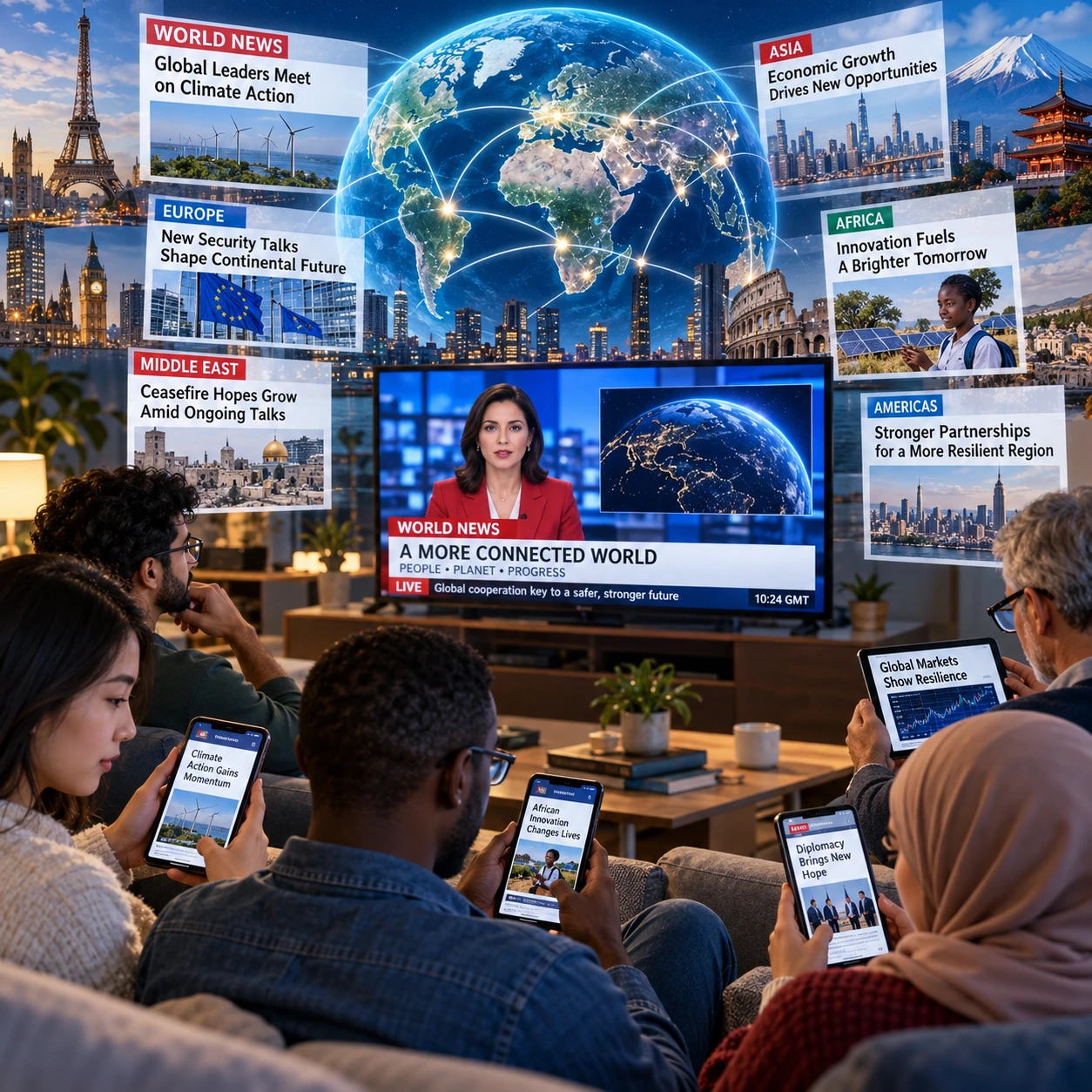
News media helps people make sense of events they may never witness firsthand, from elections and conflicts to economic shifts and climate negotiations. By choosing which stories to cover, how to explain them, and whose voices to include, news organizations can influence what the public notices and how people interpret world affairs.
That influence is real, but it is not automatic. Audiences bring their own experiences, beliefs, and sources of information to the news. Media can shape the conversation without dictating what every person thinks.
How news media influences what people pay attention to
News media influences what people pay attention to by selecting which events receive coverage and how prominently they appear. This process, known as agenda-setting, can make some issues feel more urgent or important than others.
Editors and journalists work with limited time and space. They decide which developments become headlines, lead a broadcast, or receive follow-up reporting. A prolonged focus on a humanitarian crisis, for example, can bring it into public discussion and prompt questions about aid, diplomacy, and government policy. If coverage is brief or sporadic, audiences may have fewer opportunities to understand its causes or consequences.
Agenda-setting does not mean that newsrooms can simply manufacture public concern. A story’s visibility interacts with personal experience, political debate, official statements, and coverage from other outlets. People living through a conflict may prioritize it regardless of whether distant media give it sustained attention.
It also helps to distinguish attention from opinion. News coverage can influence which questions people discuss without determining the answers they reach. The public may agree that an issue matters while disagreeing sharply about what should be done.
Framing events and shaping interpretation
Framing shapes how audiences interpret an event by emphasizing certain causes, consequences, and viewpoints. The same development can look different when coverage centers on security, human costs, economic effects, or diplomacy.
Consider a dispute over a border crossing. One report might focus on national security and government control; another might foreground families seeking refuge or the impact on neighboring communities. Both angles may describe real parts of the story, yet each guides attention toward a different set of questions. Word choice matters, too: describing a group as “militants,” “fighters,” or “residents” can carry different implications, depending on the evidence and context.
Framing is not automatically bias. Every report has to organize information, and a clear angle can help readers understand a complex issue. Problems arise when coverage strips away essential context, presents interpretation as settled fact, or repeatedly excludes relevant perspectives. Audiences should look for what a story explains as well as what it leaves unanswered.
In world affairs, context can change the meaning of a headline. A vote, ceasefire, or diplomatic statement may appear decisive on its own but be part of a longer negotiation. Reading beyond the headline and checking whether a report explains the timeline, affected groups, and uncertainty gives a more complete picture.
Sources, bias, and trust
Sources influence news credibility because they shape which facts, explanations, and experiences appear in a report. Perceived media bias can affect whether audiences trust that coverage, but a source’s identity alone does not prove a claim true or false.
For breaking news, reporters may rely first on government officials, emergency services, witnesses, or organizations with access to a location. Each source can provide useful information, but each may also have limited knowledge or an interest in how events are understood. A government spokesperson can clarify a policy position; that statement is not independent confirmation that the policy achieved its stated results.
Look for attribution and verification. Does the article identify who made a claim? Does it distinguish eyewitness accounts from official statements? Are documents, data, or multiple independent sources provided? A report that acknowledges what remains unknown may be more trustworthy than one that presents early claims as certainty.
Political communication also plays a role. Governments, parties, advocacy groups, and international organizations compete to explain events in ways that support their aims. Journalists can scrutinize those messages, but their choices of sources and emphasis can still influence public response. Comparing reputable outlets with different editorial perspectives can reveal disagreements in interpretation while helping separate shared facts from disputed claims.
The role of social media in news consumption
Social media affects news consumption by distributing stories through personal networks and platform recommendations. It can help important reporting reach large audiences quickly, while also making exposure more personalized and uneven.
People may encounter news through a journalist’s post, a friend’s comment, a short video, or a platform’s recommendation system rather than by visiting a news outlet directly. This makes information accessible, including from places where traditional reporting is limited. It also means a post can travel without the article, context, or correction that would help readers assess it.
Recommendation systems often select content based on signals such as past engagement. This can keep users informed about topics they care about, but may narrow the range of viewpoints they see. A dramatic clip can attract attention even when it lacks a date, location, or explanation. High engagement should not be confused with verification.
When a major international event breaks, pause before sharing a post. Open the original report, check when and where it was published, and see whether other credible sources confirm the central details. Social media is a useful route to information, but it is a poor substitute for checking the underlying evidence.
Misinformation and competing narratives
Misinformation complicates public understanding by spreading inaccurate or misleading claims, while competing narratives can present different explanations of the same event. In fast-moving crises, early reports may be incomplete, and false certainty can travel faster than careful verification.
Not every error is deliberate. A mistaken translation, an old image shared as current, or an unverified eyewitness account can mislead without a coordinated campaign behind it. Disinformation, by contrast, generally refers to false or misleading information spread deliberately. In practice, readers may not know the motive behind a post, so the first task is to assess its evidence.
Watch for warning signs: no named source, a cropped image with no original context, claims that demand immediate sharing, or a headline stronger than the article itself. Check the date and location, search for the original image or statement, and compare the claim with reporting from multiple independent outlets. If reputable sources disagree, note what is confirmed and what remains contested rather than treating one account as settled.
False balance is another risk. Giving an unsupported claim equal weight with well-documented evidence can make a settled fact look uncertain. Responsible coverage should describe genuine disputes, explain the strength of available evidence, and update the record when new information emerges.
How audiences can assess news critically
Readers can assess news critically by checking the source, evidence, context, and presentation before accepting or sharing a claim. This practical routine, the four-part check, helps separate what is known from what is inferred.
- Source: Identify the outlet, author, and original source of the key claim. Is the report based on named witnesses, documents, officials, or anonymous accounts?
- Evidence: Look for links to primary material, such as a report, transcript, dataset, or full video. A confident tone is not evidence.
- Context: Check the date, location, timeline, and relevant background. Ask whether a headline accurately reflects the article.
- Presentation: Notice loaded language, omitted viewpoints, and the difference between fact, analysis, and opinion. Compare coverage to see which details are consistent and which are disputed.
This does not require treating every outlet as equally reliable or reading every side of every argument. It means matching confidence to evidence. When a story is developing, waiting for confirmation can be more responsible than sharing the first striking post.
Media literacy is a habit of careful attention, not a demand for cynicism. Trustworthy reporting can still make mistakes, and skepticism can become unhelpful if it turns into the assumption that no facts are knowable. The goal is to ask precise questions, recognize uncertainty, and stay open to corrections.
Frequently asked questions
What is agenda-setting in news media?
Agenda-setting is the way news coverage influences which issues receive public attention. It can affect what people consider important without deciding what position they take.
Does the news tell people what to think?
News media can shape interpretation through framing, source selection, and repetition, but it does not control audience beliefs. People interpret coverage through their experiences, values, and other information.
How does social media affect public opinion?
Social media can quickly spread news and personal accounts, while recommendation systems and sharing habits influence what users see. This can widen access to information or reinforce a narrow view, depending on what circulates in a person’s network.
How can readers identify bias or misinformation?
Check who made the claim, what evidence supports it, whether the date and context are accurate, and how independent sources report it. Look for a clear distinction between verified facts, analysis, and opinion.